Category: Fleming

6

Six Crises, Podcast Episode 0: Introduction

By

Dr. Fleming and Rex begin a conversation on the plunge of the United States into anarcho-tyranny and on the American refusal to look reality in the face without flinching.   In the next six  (possibly seven) episodes,  they will take up, one by one, the key events that turned a naive American boy into a Jeremiah,  First up will be the  downing of  the U-2 spy plane shot down in 1960.    

6

Florence/Tuscany Update

Bowing to popular demand, the program in October we are planning will be held in Tuscany.  My current thinking is to stay for 3-4 days in Florence and Arezzo, and from those bases we shall visit a few smaller places.  Possible destinations include Chiusi, Montepulciano, and Pistoia.  

0

Ask Mr. Autodidact

Karl White writes in to ask which translations of Herodotus and Thucydides I recommend.  In some ways, I am not the best person to ask, since I do not spend much time reading translations, but I have used a number of translations of the historians for classes.  

0

Autodidact: Homer’s Iliad I

So begins an epic poem that many readers even today regard as the best work of literature that has ever been written, equalled only by the Odyssey. I never cared for such judgments—the most important theologian, the 3 greatest western movies ever made, the world’s best hotdog.  I leave the making of lists to newly wed brides who torture their husbands with “Honey Do lists” they post on the bathroom mirror.

0

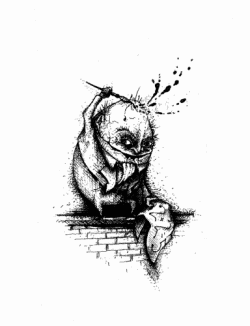
Humpty Dumpty on Idiots

I continue to learn the most amazing things on Facebook–generally the things I thought I knew in grammar school and had to spend a lifetime unlearning. Today, someone recirculated a meme with the old wheeze that “idiot” comes from a Greek word meaning private citizen who did not take an interest in public affairs, to which a libertarian–very reliable people, libertarians, one knows what they are going to respond before a question is posed–that the polis was everything.

2

A Brief Account of Siena, Part II

In Tuscany, as in ancient Greece, neighborhoods and religious associations played a major part in the organization of everyday life.  In Tuscany the church Parishes and the neighborhoods that grew around them, whether known as quartieri (quarters),  sesti (sixths), or (in Rome and elsewhere)  rioni  were the locus of many activities, including the repair of roads and walls.