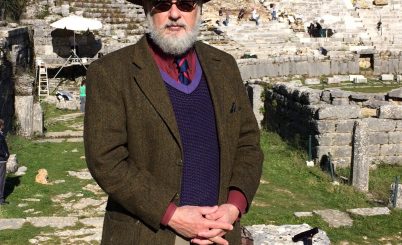
Descent Into Hell, Chapters II-IV
In most novels, this suicide would be the end of an uninteresting and unnamed character, but here it is just the beginning, as he continues to wander about, more lost than ever before.

In most novels, this suicide would be the end of an uninteresting and unnamed character, but here it is just the beginning, as he continues to wander about, more lost than ever before.
No, the title of this brief announcement does refer to the birth of a baby, trailing clouds of glory, into the abyss of human life in the New America. It is the title of a Charles Williams novel that has been termed a “theological thriller.”
Some time ago, I abandoned the regular discussion of selected books. The reason should have been obvious. The cause has disappeared, and we can resume. Working on the second volume of Properties of Blood, I need to rewrite the chapters on revenge. This is a good occasion for looking at the classic work of the English stage, The Avenger’s Tragedy….
Chatterton, a late 18th century poet, is more famous as a legend–the teenage poet who died at 17–than as a writer. The Romantics, French as well as English, lionized him. His best known poems are the medievalizing verses he attributed to a 15th century poet, but his talent for painting satiric portraits is evident in “Apostate Will”–a fine sketch of the clergy on the make,
Many otherwise good people are upset with the remarks made by a tech school prof who said she hoped Queen Elizabeth died a slow and painful death. Evil, stupid, ignorant are some of the epithets I have heard applied to the prof in question, but would anyone not evil, stupid, and ignorant be interested in teaching uncritical racism, an ideology designed to stir up hatred and violence among all racial groups. And, what kind of a school, once famous for engineering, would inflict such a course on would be engineers and architects? Obviously, not a school anyone in his right...
Nonetheless…if there is one thing we Americans take seriously, it is money But even on that most vital subject, we cannot bring ourselves to tell the truth.
As I sat at the café, I said to myself,
They may talk as they please about what they call pelf,
Most modern schools of philosophy base morality on the principles of reason, and the principal accounts of moral development emphasize growth in moral reasoning rather than moral behavior. To be a human person in this sense would mean that an individual is conscious of his own existence and capable of making rational decisions, including the decision to remain alive.
On abortion and other forms of infanticide, Nature gives us the sort of answer she always gives–general rules and statistical averages to which there are exceptions, but, from the Christian perspective, Nature is the tarnished mirror in which we can only glimpse, obscurely, the true reality
The obligation to care for one’s offspring is a human universal, like the incest taboo or the prohibition of murder. Human and primate mothers, as a rule, devote themselves to their children, and mother-love is regarded conventionally as the most selfless and irrational forms of human attachment.