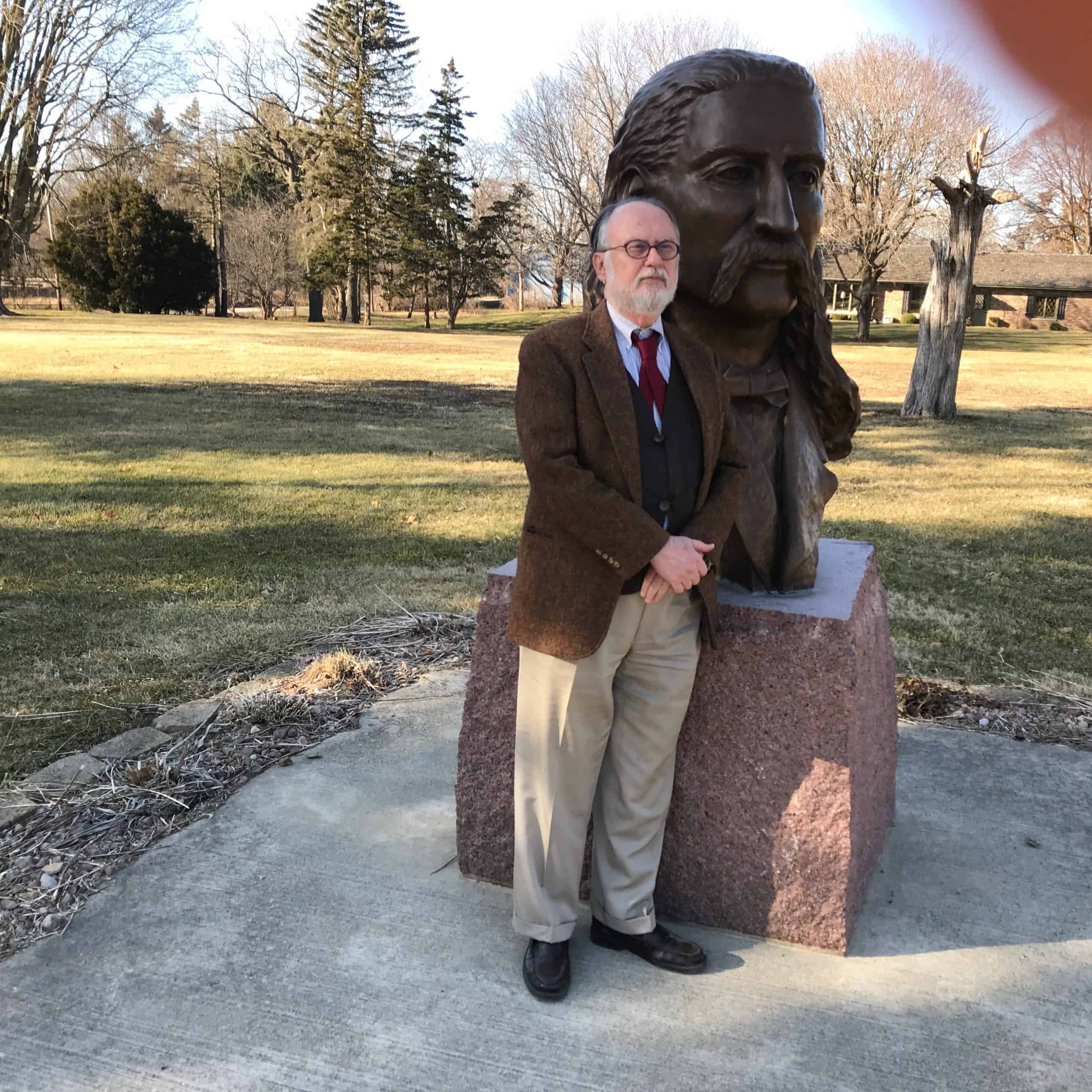
I’m Ready to Lead
My campaign manager Red Phillips, recovering from a COVID infection that sent him recently into the ICU, arose from his bed of suffering to create our first poster

My campaign manager Red Phillips, recovering from a COVID infection that sent him recently into the ICU, arose from his bed of suffering to create our first poster
Why is the Father in heaven–or rather in the heavens–and what and where are they? Listeners are advised to cut off the podcast before the castrato sings at the end.
“Black History Month, which used to be known as February…”
Sam Francis’ witticism has been repeated ad infinitum, by friend and foe alike, usually with little appreciation of the broader implications, which extend far beyond the politics of race. The politics of race, let us never forget, is merely one comparatively small part of the Revolution against Western civilization and human nature.
I have often wondered about the principle of disclosure, which is so easily taken to interesting lengths. Of course like others I can applaud when a journalist doing a story on some Fortune500 company is criticized for not revealing that the CEO is his brother-in-law, or when a juror is prosecuted for concealing an intimate connection with the man on trial. But beyond that?
Most Americans are convinced that they live in a democracy. Who can blame them? They have been told nothing else throughout their lives. Until not too long ago, there had been a remnant of conservatives who insisted that the Founding Fathers had established a republic, but the constant jeers from the Leftist Mainstream have apparently forced them to drop this affectation.
We live by our opinions. While other people’s opinions are called illusions, if they pose no threat to our interests, and prejudices if they do, we call our own opinions “truth” or fundamental principles, if we are fools; if we are more cautious we prefer to speak of theories and hypotheses
Many years ago, to test the gullibility of colleagues and readers, I started the rumor that I was being considered as a possible Presidential candidate. No one I know could be that gullible? Think again, one prominent libertarian-leaning conservative called to find out if it was true. Obviously, he was sounding me out for a cabinet appointment. A few years later, I printed a piece, which I explicitly attributed to a dream, in which I was being dragged to the Hague to be put on trial for complicity in Slobodan Milosevic’s genocidal policies in Kosovo. Again, who would believe it?...
America’s movie industry committed to the western almost immediately, what with the sensational success of The Great Train Robbery (1903). Feature-length westerns came about a decade later, thanks to the nascent star system
With the ongoing repression by the Democratic Party-Silicon Valley-Mainstream Media Axis, some of my friends are worried America will become a tyranny, with no free speech. We could have some rough times, but in the end freedom will prevail.
If Donald Trump is doomed to endure a second ordeal of impeachment proceedings, what are we to expect?